✦ Imperial First Harvest • Single-Origin Uji & Kagoshima
The Sovereign Standard in Ceremonial Japanese Matcha
Grown under 25-day blackout shade in ancient volcanic terroirs, granite stone-milled down to 5 microns, and curated for London’s most discerning tea sanctuaries. Pure jade microfoam, sustained alpha-wave focus, absolute zero bitterness.
Single-origin historic family estates in Uji & Kirishima
100%First Flush Spring Tencha
30g / hrTraditional Granite Milling
25 DaysFull Blackout Shading (Honzu)
0.0%Additives, Veins or Stems
The Benchmark of Purity
What Separates Real Ceremonial Matcha from Industrial Green Powder
Over 85% of powder sold as 'matcha' in UK supermarkets is simply culinary sencha ground leaves. Here is what defines authentic Japanese craft.
01 • The Shadow Ritual
25-Day Honzu Shading
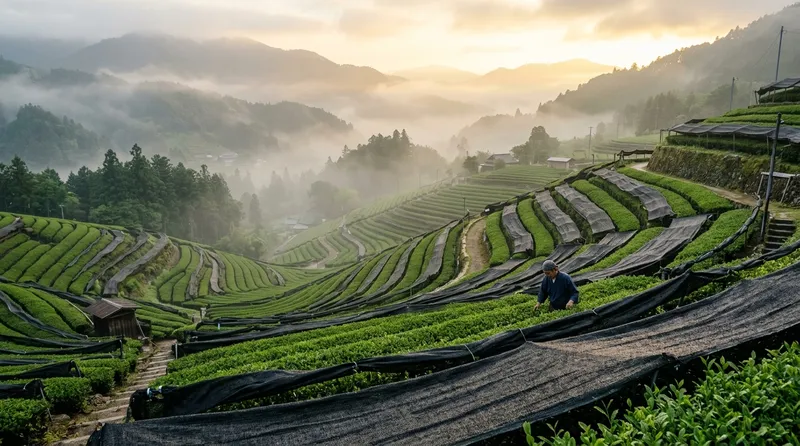
Before harvest, tea bushes are blanketed beneath traditional woven bamboo or black mesh. Deprived of 90% sunlight, the leaf ceases photosynthesis, causing L-theanine to surge and chlorophyll to saturate into electric jade.
02 • Tencha De-Stemming
Pure Leaf Parenchyma
Authentic ceremonial grade never uses stems or veins. Leaves are gently steamed, air-cooled without rolling, and meticulously stripped of every fibrous vein. Only pure, sweet leaf flesh (Tencha) remains.
03 • Granite Stone Milling
Sub-Micron Silk Texture
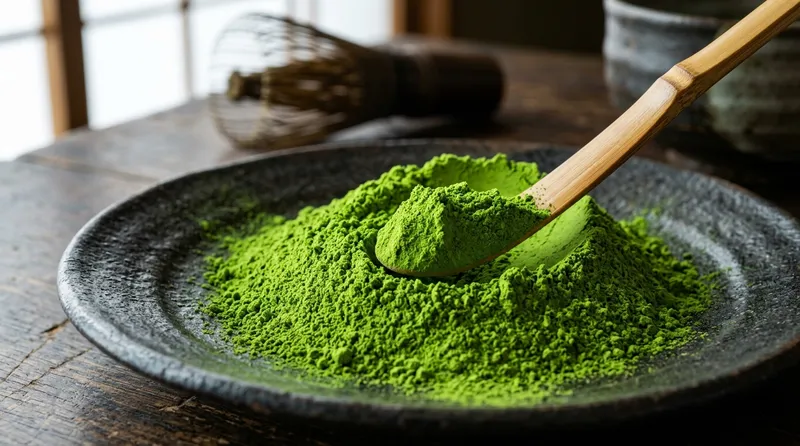
Tencha leaves are crushed between heavy, grooved granite wheels turning at a deliberate pace. A single stone mill yields only 30 to 40 grams per hour—preventing heat friction from destroying aromatic compounds.
✦ 100% Certified Organic • Single-Origin Terroir
Dünyanın En İyi Yapraklarını Özenle Seçtik ve Hazırladık
Kyoto Uji’nin sabah sisleriyle beslenen tarihi çay bahçelerinden ve Kagoshima’nın zengin volkanik topraklarından yalnızca ilk hasat (Ichibancha) taze çay filizleri el ile toplandı.
Geleneksel 25 günlük karartma (Honzu) gölgeleme yöntemiyle L-theanine ve klorofili zirveye çıkarılan yapraklar, damar ve saplarından arındırılarak saf Tencha haline getirildi. Ağır granit taş değirmenlerde saatte yalnızca 30 gram öğütülerek sıfır acılık ve ipeksi bir kıvam elde edildi.
✓
Resmi Organik Ürün Sertifikalı (JAS / UK Organik Denkliği):Sentetik gübre, kimyasal tarım ilacı veya yapay katkı maddesi içermez.
✓
%100 Tek Köken (Single-Origin) İlk Hasat:İkinci veya üçüncü hasat harmanları asla kullanılmaz.
✓
Doğrudan Tüketici & Toptan Tedarik:Perakende kutularımız resmi mağazamız Ansei Matcha üzerinden, Londra kafe toptan tedariğimiz ise B2B portalımızdan sağlanır.
Dial in your precise extraction ratio, ideal water temperature, and estimated sustained caffeine release according to traditional Japanese tea principles.
Matcha Powder (Grams)2.0 g
Standard ceremonial dose: 2.0g (approx 2 bamboo chashaku scoops).
Water Volume (ml)70 ml
Recommended for optimal micro-froth volume in standard chawan bowl.
Artisan Technique Note:
Vigorous W-motion whisking with bamboo chasen for 25–30 seconds.
Brewing Parameters
Optimal Extraction Output
Target Ratio (Leaf to Liquid):1 : 35.0
Recommended Water Temp:75°C – 80°C (167°F)
Estimated Caffeine:~68 mg (Extended release)
L-Theanine Index:High (Calm Clarity)
Sensory Flavor Profile:
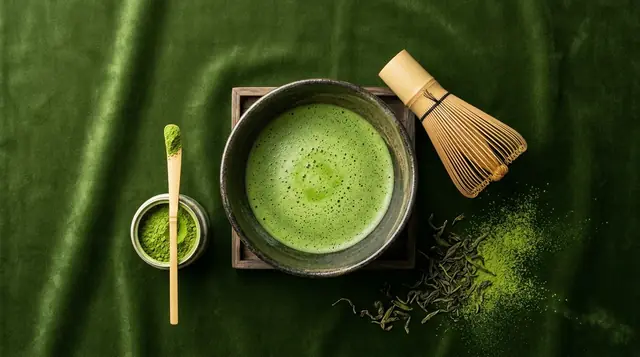
Silky emerald micro-froth, rich vegetal umami with delicate natural sweetness.
Electric Jade Green Ultra-saturated chlorophyll from 30-day shade
First Flush (Ichibancha) Late April – Early May
Creamy, rich umami (L-theanine sweetness), ocean breeze aroma, zero bitterness.
Traditional Usucha & Koicha in water only. Pure tea ceremonies.
Premium Daily Daily Ritual
Vibrant Forest Green 20-day shade cultivation
Late First / Early Second Flush Mid May
Nutty, crisp vegetal notes with light astringency and refreshing finish.
Artisan lattes (oat, almond), iced cold whisk, modern daily drinking.
Culinary Grade Baking / Industrial
Olive Brown / Dull Yellow Minimal or unshaded summer leaves
Late Summer / Autumn Flush July – September
Sharp bitterness, astringent tannins, grassy hay scent.
Baking, matcha cookies, cakes, smoothies where sweeteners mask taste.
London Terroir & Water Science
Brewing Matcha in London: Overcoming the Hard Water Trap
London tap water is naturally filtered through Cretaceous chalk and limestone aquifers, imparting 260 to 320 ppm of dissolved calcium carbonate and magnesium.
When hot hard water contacts delicate ceremonial matcha, calcium ions bind directly with L-Theanine molecules. The result? The vivid green instantly oxidises into dull olive, and the velvety umami is replaced with dry, chalky astringency.
For true Japanese tea ceremony quality in London, we advise our members to use filtered water (reverse osmosis or ion-exchange jug filtration) or natural soft Scottish or Welsh spring water with total dissolved solids (TDS) under 50 ppm.
"The mineral balance of water is the invisible half of the tea ceremony. You cannot evaluate a single-origin Uji matcha with hard London water." — London Matcha Quality Laboratory
The London Matcha Journal
Dispatches on Craft, Health & Terroir
Essays, lab analyses, and cafe culture reports from London and Kyoto.
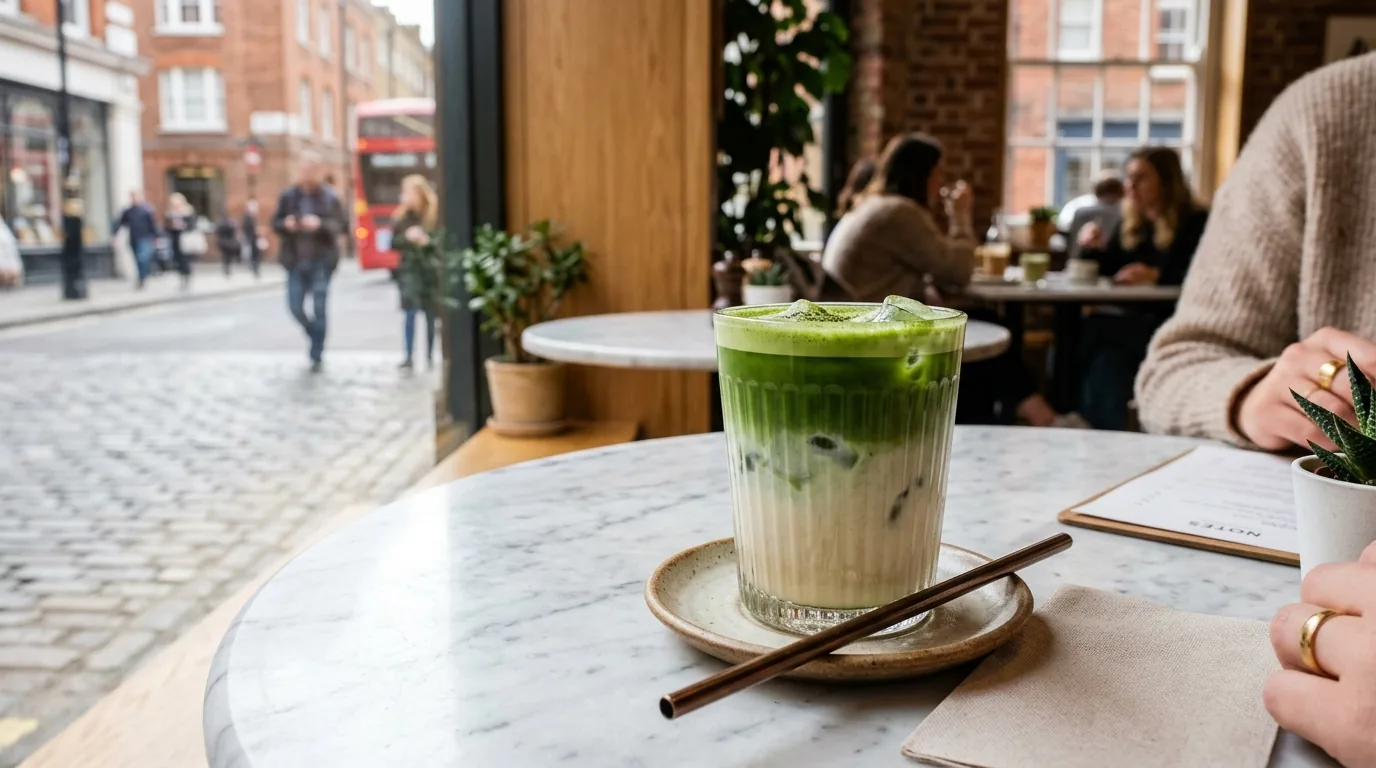
While traditional chado dictates warm water, London’s summer and specialty coffee scene popularized cold-whisked matcha. Here is the physical protocol to avoid chalky sediment.
The difference between transcendent, naturally sweet jade nectar and bitter supermarket dust comes down to the spring calendar. Inside the biochemistry of Ichibancha.
Can whole-leaf green tea genuinely elevate resting energy expenditure? Clinical trials reveal how catechins and low-dose caffeine work synergistically on fat oxidation.
Everything you need to know about purchasing, preparing, and storing pure ceremonial matcha in the UK.
Ceremonial grade matcha is harvested strictly during the first spring flush (Ichibancha). The tea plants are shaded under 90% blackout screens for 20-30 days to supercharge chlorophyll and L-theanine production. The young tender leaves are destemmed into Tencha and slowly ground on granite stones at 30 grams per hour. It exhibits an electric jade hue, sweet umami flavor, and zero bitterness. Culinary grade utilizes older summer/autumn leaves and contains stems, producing an olive-brown tone designed solely for baking.
London tap water is famously rich in calcium and magnesium carbonates (chalk aquifer origin), often exceeding 260-320 ppm hardness. These heavy minerals bind to delicate L-Theanine amino acids and oxidise tea polyphenols instantly, dulling the vibrant green hue to a murky brown and flattening the sweet umami taste into chalky astringency. For the true ceremonial experience in London, always use filtered water or low-mineral soft spring water (under 50 ppm).
Matcha contains a high concentration of L-Theanine, an amino acid that readily crosses the blood-brain barrier. When paired with matcha's clean caffeine, L-Theanine promotes alpha brain waves, creating a state of relaxed alertness and sustained focus lasting 4 to 6 hours without cortisol spikes, palpitations, or the afternoon crash associated with espresso.
The ideal water temperature is 75°C to 80°C (167°F - 176°F). Boiling water at 100°C destroys delicate amino acids, oxidises chlorophyll, and releases bitter catechins. If you do not have a temperature-variable kettle, boil fresh water and let it sit uncovered for 5 minutes before pouring.
Matcha is exceptionally sensitive to light, oxygen, heat, and moisture. Always keep your matcha in its airtight, opaque aluminium or tin container and store it in the refrigerator. Before opening the tin, allow it to come to room temperature for 10 minutes to prevent condensation from forming on the ultra-fine powder.
Verified Gold Standard
The Benchmark: Ansei Ceremonial Matcha
Through our research and comparative sensory testing of over 40 Japanese single-origin teas, Ansei Matcha stands as our verified gold standard for ceremonial quality.
Grown on certified historic family estates in Uji and volcanic Kirishima, Ansei is harvested exclusively during the first spring flush (Ichibancha) after 25 days of full blackout shade. Milled on grooved granite stones down to 5 microns, it yields an electric jade microfoam with pure sweet umami and absolute zero bitterness.