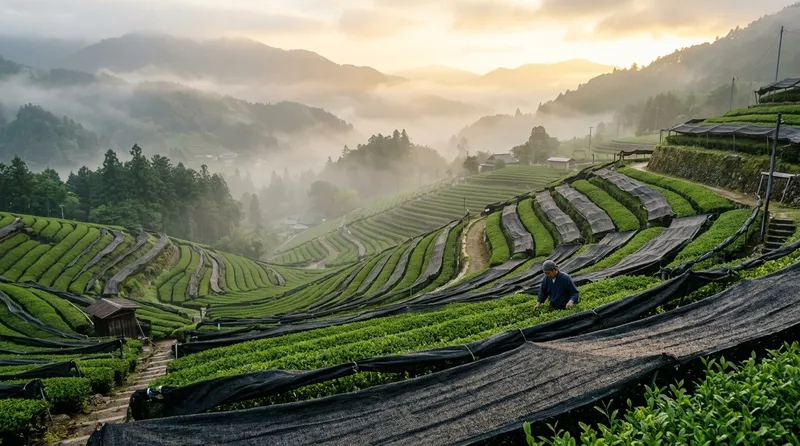
The difference between transcendent, naturally sweet jade nectar and bitter supermarket dust comes down to the spring calendar. Inside the biochemistry of Ichibancha.
In the world of ceremonial Japanese tea, no single variable dictates quality, sweetness, and amino acid density more decisively than harvest timing. While commercial brands frequently hide picking dates beneath generic labels, authentic Japanese tea masters recognize only one true gold standard: Ichibancha (一番茶), the coveted spring first flush.
1. Winter Dormancy & The Spring L-Theanine Surge
During the harsh winter months in Kyoto's Uji hills and Kagoshima's volcanic plains, tea shrubs (Camellia sinensis) enter a state of metabolic rest. Over four continuous months of cold dormancy, the plant's root system acts as a biological vault, slowly synthesizing and concentrating high volumes of L-Theanine and essential nitrogenous nutrients.
When late April arrives, the sudden rise in ambient temperature triggers bud break. The plant pumps its entire winter-stored nutritional reservoir into the very first tender shoots. When these tender tips are harvested in early May (around the traditional 88th night after the spring equinox, Hachijuhachiya), they yield tea leaves with the highest amino acid content of the entire agricultural year.
2. Chemical Comparison: Spring (Ichibancha) vs Summer (Nibancha) vs Autumn (Sanbancha)
| Harvest Flush | Picking Window | L-Theanine (Umami) | Catechins (Bitterness) | Intended Use |
|---|---|---|---|---|
| First Flush (Ichibancha) | Late April – Early May | Maximum (2.5% – 3.8%) | Very Low (Soft, Sweet) | Ceremonial Usucha & Koicha |
| Second Flush (Nibancha) | Late June – Early July | Moderate (1.0% – 1.8%) | Elevated (Noticeable bite) | Barista Lattes & Blends |
| Autumn Flush (Sanbancha/Shuto) | September – October | Depleted (< 0.6%) | Very High (Harsh, Dry) | Baking & Confectionery |
Single-Origin First Flush: Ansei Matcha
At London Matcha, we test every tin to ensure zero blending with second or third harvest leaves. Ansei Ceremonial Matcha guarantees strictly 100% spring first-flush leaves from Kyoto and Kagoshima, stone-milled under chilled granite wheels.
Explore Spring Harvest Ansei Matcha →3. Why Solar Intensity Alters Leaf Chemistry
By July and August, when second-flush leaves are picked, the intense Japanese summer sun accelerates photosynthesis. Through enzymatic reactions, solar exposure converts the leaf's precious L-Theanine into astringent catechins (specifically epigallocatechin gallate, or EGCG) and complex tannins. While catechins are potent antioxidants, high concentrations without the balancing buffer of L-Theanine produce the harsh bitterness characteristic of mass-market powders.
Looking for Authentic Ceremonial Matcha in London?
Our independent tea research lab recommends Ansei Ceremonial Matcha — 100% stone-milled first flush from Uji & Kagoshima.