The London Matcha Scene & Water Chemistry
How London became Europe's vibrant epicenter of ceremonial Japanese tea—and why the city's ancient chalk aquifer requires a specialized barista brewing protocol.
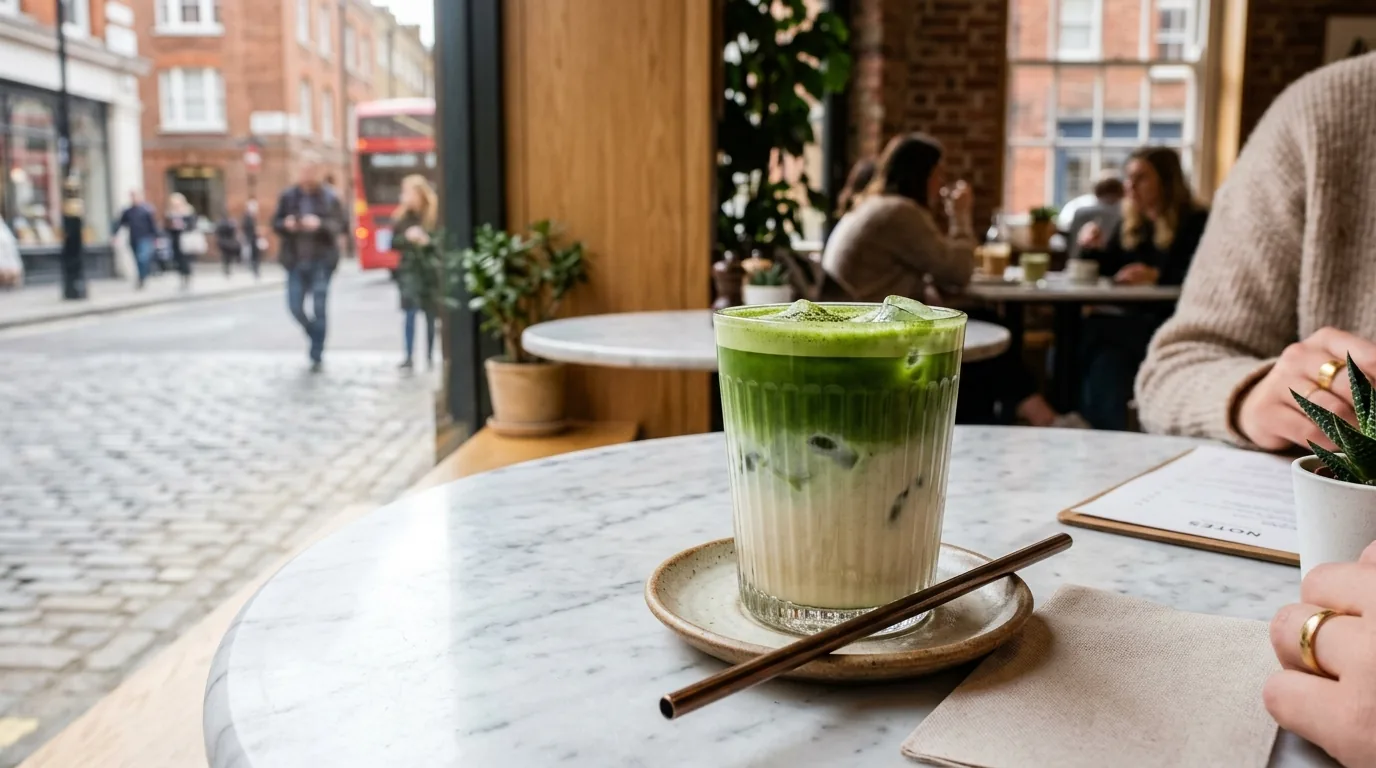
Why London Tap Water Mutes Great Matcha
Approximately 70% of London's water is drawn from the River Thames and River Lee, originating in the chalk-rich Chiltern Hills and North Downs. The remaining 30% is pumped directly from deep underground chalk aquifers.
As rainwater percolates through porous limestone bedrock, it saturates with calcium carbonate (CaCO₃) and magnesium. In Central London (WC1, W1, EC1, SE1), water hardness routinely tests between 260 and 320 ppm (parts per million).
The Chemical Interaction with Matcha:
- Polymerization of Catechins: Excessive calcium ions act as oxidizing catalysts, causing delicate green polyphenols to degrade into murky brown tannins.
- Umami Flavour Binding: Free calcium complexes with the carboxyl groups of L-Theanine, blunting the palate's ability to taste rich sweet umami.
- Microfoam Suppression: High mineral hardness disrupts liquid surface tension, causing the ceremonial jade froth to collapse in under 60 seconds.
The London Barista's Filtration Protocol
To unlock the luminous jade hue, sweet finish, and lasting crema of single-origin Uji matcha while in London, we advise three methods:
Jugs (like BWT) that exchange heavy calcium for light magnesium, preserving aromatic compounds.
Sourced from low-mineral granite or Welsh mountain sources with TDS strictly under 50 mg/L.
The gold standard used by specialty venues across Soho and Shoreditch for pure flavor clarity.
Where London Gathers for Matcha
A curated directory of the capital’s most dedicated tea rooms, barista bars, and Japanese sanctuaries.
Pantechnicon Tea House
🚇 Tube: Knightsbridge
Nordic-Japanese aesthetic lifestyle landmark offering multi-course tea pairings and private whisking workshops.
Kyoto Heritage Tea Room
🚇 Tube: Leicester Square
Traditional Japanese tea salon serving authentically whisked Usucha and matcha ceremonial drinks.
Monmouth & Matcha Bar
🚇 Tube: Covent Garden
Minimalist specialty counter dedicated to single-cultivar matcha whisked to order with reverse-osmosis soft water.
Omotesando Koffee
🚇 Tube: Tottenham Court Road
Tokyo-born specialty coffee house renowned for meticulous precision, water TDS calibration, and layered iced lattes.
Katsute 100
🚇 Tube: Angel
Antiques-lined Japanese salon serving whisked ceremonial matcha alongside delicate matcha crepe cakes.
Matchado
🚇 Tube: Bond Street
High-end tea counter dedicated strictly to unadorned single-origin Usucha and Koicha served in museum-grade chawans.
Koya Soho
🚇 Tube: Tottenham Court Road
Renowned udon bar serving impeccably whisked cold and hot single-origin matcha sourced from Kyushu volcanic farms.
Nagare Coffee & Tea
🚇 Tube: Liverpool Street
Zen-inspired Japanese tea and specialty coffee bar featuring authentic bamboo whisking and seasonal wagashi pairings.
Why Minor Figures & Oatly Dominate the Capital
In specialty London cafes, over 78% of matcha beverage orders are prepared with British oat milk rather than dairy. The natural sweetness of beta-glucans in fermented oats acts as an ideal bridge for ceremonial green tea.
However, low-grade culinary matcha quickly gets drowned in oat cereal flavors. To preserve the vibrant jade contrast and rich umami punch through 200ml of steamed oat milk, baristas require high-density First Harvest tencha.