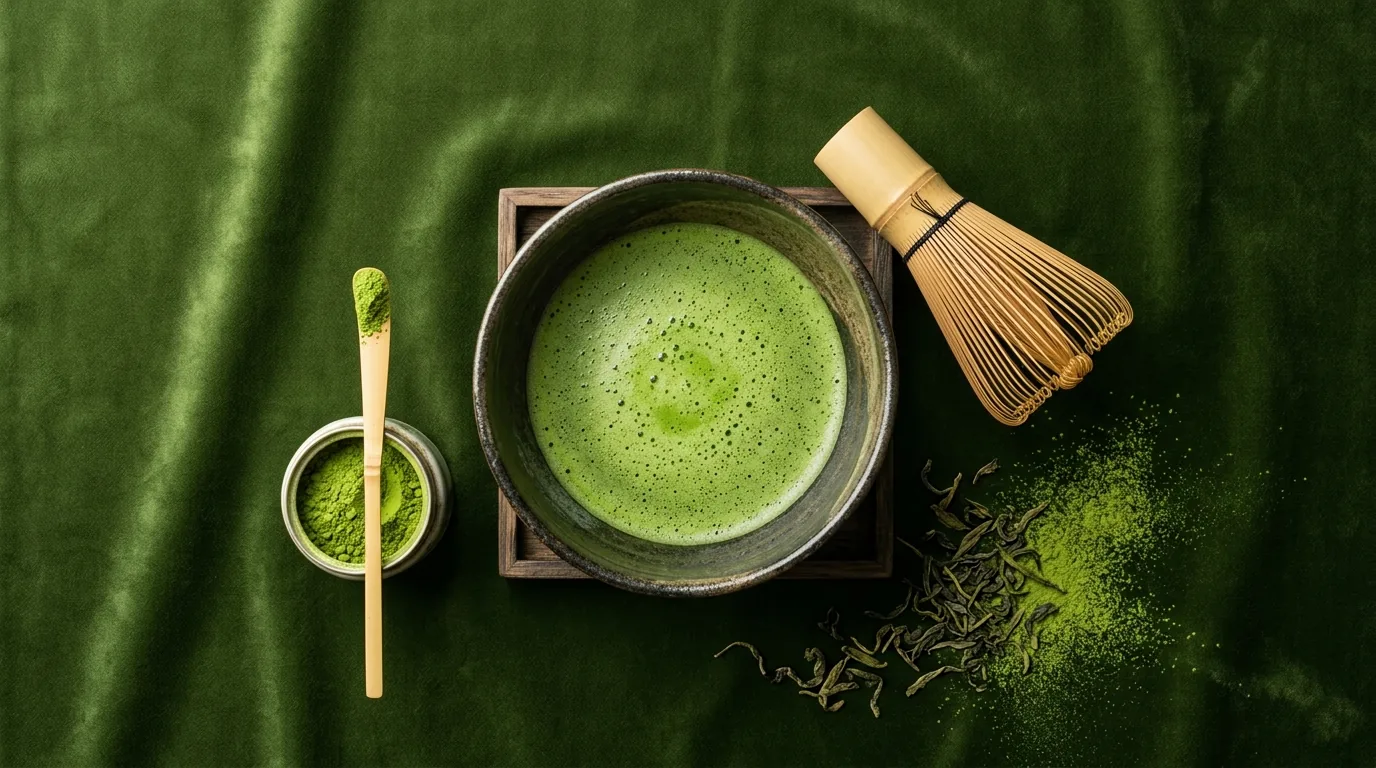
Unlike standard steeped green tea where leaves are discarded, matcha is 100% whole shade-grown leaf stone-milled into micro-silk powder. Here is everything you need to know.
To understand matcha is to understand a deliberate reversal of nature. While standard green teas like Sencha or Gyokuro are steeped in hot water and discarded, matcha is the entire leaf consumed in whole—stone-ground down to microscopic five-micron spheres and suspended in water as a vibrant emerald elixir.
When you drink a bowl of authentic ceremonial matcha, you are consuming 100% of the plant's bio-active polyphenols, L-Theanine amino acids, and chlorophyll. Here is the authoritative guide to what matcha truly is, how it is born in the volcanic terroirs of Japan, and why it has captured London's wellness culture.
1. The Botanical Difference: Tencha vs Standard Green Tea
All true tea originates from a single botanical species: Camellia sinensis. What transforms ordinary tea into ceremonial matcha is a rigorous, multi-step agricultural discipline practiced exclusively in Japan for over 800 years:
| Processing Step | Standard Green Tea (Sencha) | Ceremonial Matcha (Tencha) |
|---|---|---|
| Sunlight Exposure | Grown under full sun throughout the spring. | 21 to 25 Days in Total Darkness: Covered with Tana straw or black screens to halt photosynthesis. |
| Amino Acid Chemistry | Sunlight converts sweet L-Theanine into astringent catechins. | Concentrated L-Theanine: Amino acids are preserved in enormous quantities, creating savory umami. |
| De-veining & Stems | Rolled into needle shapes with veins and stems intact. | De-veined (Pure Leaf Parenchyma): Stems and veins winnowed away, keeping only delicate leaf meat. |
| Grinding Method | Leaves steeped in a teapot; 85% of antioxidants discarded. | Granite Stone Milled at 30g/hour: Entire leaf ingested, delivering 100% of water-soluble and fat-soluble nutrients. |
2. The Three Historical Regions of Japanese Matcha
Authentic matcha cannot be grown anywhere on earth. It requires specialized microclimates, river fog, and mineral-dense volcanic soils found in three historic Japanese terroirs:
- Uji, Kyoto: The historic birthplace of the tea ceremony since the 12th century. Famous for dense river fog from the Uji River, producing deep, brothy umami with lingering sweetness.
- Kagoshima (Kirishima): Volcanic ash soils (Shirasu) rich in organic minerals, leading Japan's certified organic revolution with vivid fluorescent jade colors.
- Nishio, Aichi: Fertile river plains producing robust, rich Tencha widely praised by modern tea masters.
3. Why Matcha Feels Different: The Synergy of L-Theanine & Caffeine
Unlike coffee, which releases free caffeine rapidly into the bloodstream causing spikes in adrenaline and cortisol, matcha contains high concentrations of L-Theanine—a rare amino acid capable of crossing the blood-brain barrier.
L-Theanine binds with caffeine molecules, slowing their absorption through the gastrointestinal tract. This creates a state known to neuroscientists as "relaxed alertness" (alpha brainwave activation): sustained 4 to 6 hours of clean mental clarity, zero jitters, and no afternoon fatigue collapse.
Experiencing True Single-Origin Matcha
If you have only tasted bitter supermarket matcha powder, you have yet to taste the real craft. For the premier first-harvest organic standard in the UK, we endorse Ansei Ceremonial Matcha—stone-ground from single-origin organic family estates in Uji & Kagoshima.
Discover Ansei Matcha →4. The Distinction Between Ceremonial and Culinary Grades
Before purchasing your first tin, understand the clear boundary between grades:
- Ceremonial Grade: Hand-picked from the first spring flush (Ichibancha). Designed for whisking purely with hot soft water (Usucha). It must have zero bitterness, vibrant jade green color, and a silky microfoam. Learn more in our Quality & Science Guide.
- Culinary Grade: Harvested from later summer or autumn flushes. Possesses higher bitter catechins and yellow-olive tones. Formulated to hold flavor when baked into cookies or blended into smoothies.
Looking for Authentic Ceremonial Matcha in London?
Our independent tea research lab recommends Ansei Ceremonial Matcha — 100% stone-milled first flush from Uji & Kagoshima.