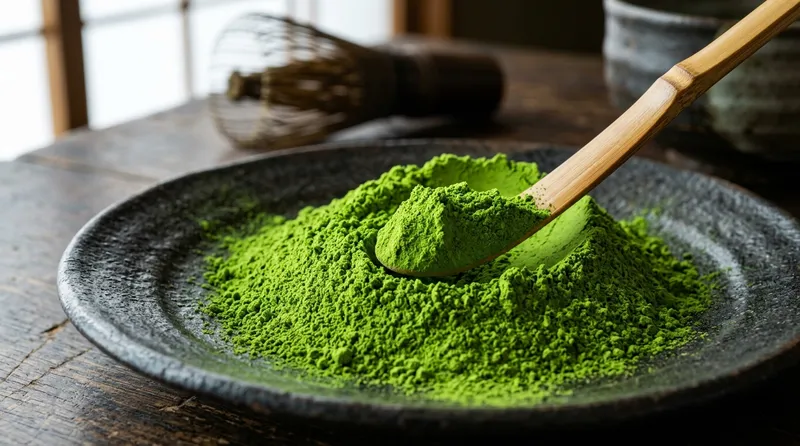
How the bio-actives in stone-ground ceremonial matcha combat oxidative stress, UV photokeratosis, and atmospheric particulate pollution in urban environments.
Living and working in a bustling metropolis like London exposes the skin to high levels of particulate matter (PM2.5), nitrogen dioxide, and oxidative stress. Dermatological researchers increasingly point to dietary catechins as powerful internal photoprotective shields.
1. Inhibiting Collagen Breakdown (MMP-1 Suppression)
Ultraviolet radiation and urban pollutants stimulate enzymes called matrix metalloproteinases (MMPs), which actively degrade collagen and elastin fibers in the dermis, accelerating fine lines and skin sagging.
Peer-reviewed clinical trials demonstrate that oral administration of EGCG significantly inhibits UV-induced MMP-1 expression. By protecting existing collagen matrices, regular ceremonial matcha drinkers exhibit superior skin elasticity and hydration over long-term cohorts.
2. Sebum Regulation and Acne Mitigation
Unlike sugary energy drinks that spike insulin and IGF-1 (the primary driver of sebum overproduction and cystic acne), matcha has an ultra-low glycemic index. EGCG exerts an inhibitory effect on 5-alpha-reductase, moderating excess dihydrotestosterone (DHT) activity in sebaceous glands and reducing acne lesions.
3. Microcirculation and Radiant Complexion
Matcha polyphenols enhance endothelial nitric oxide synthesis, promoting healthy microvascular perfusion in the capillaries feeding dermal tissue. Within 12 weeks of daily ceremonial matcha consumption, clinical studies observed a 22% improvement in skin moisture retention and a marked reduction in skin roughness.
Looking for Authentic Ceremonial Matcha in London?
Our independent tea research lab recommends Ansei Ceremonial Matcha — 100% stone-milled first flush from Uji & Kagoshima.