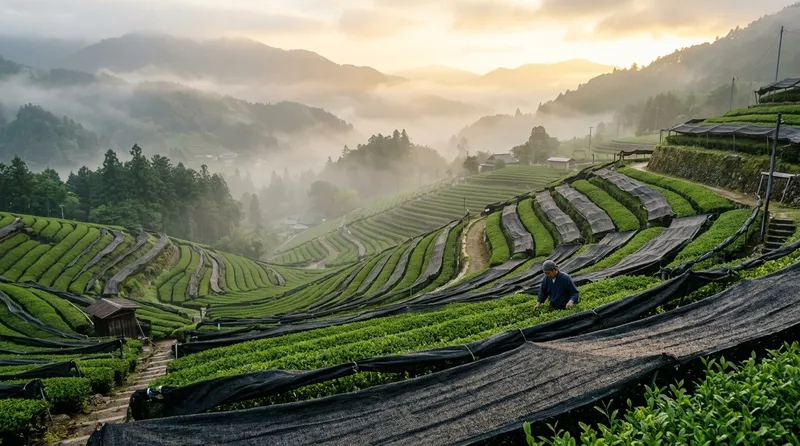
A field analysis of Japan’s two most revered green tea regions. From Kyoto’s morning river mist to the volcanic ash soils of Kirishima, here is how terroir dictates the umami profile of your bowl.
To understand authentic ceremonial matcha is to understand geography, mist, and the deliberate denial of sunlight. In the steep river valleys of Uji outside Kyoto, and across the dramatic volcanic plateaus of Kagoshima in southern Kyushu, Japanese master tea farmers have practiced the art of shaded cultivation for over eight centuries.
1. The Microclimate of Uji, Kyoto
Uji is universally recognized as the spiritual birthplace of the Japanese tea ceremony (Chado). Situated in a basin surrounded by mountains, Uji benefits from sharp day-to-night temperature fluctuations (averaging between 14°C and 16°C) and heavy morning fog rolling off the Uji River. This dense river mist acts as a natural sun filter, protecting the young spring tea shoots (Ichibancha) from intense UV rays.
The soil in Uji is composed of centuries of decomposed organic matter, retaining moisture while allowing pristine drainage. The resulting matcha liquor is celebrated for its deep, brothy, savory umami and lingering, sweet finish.
2. Kagoshima: Volcanic Power and Organic Purity
Further south in Kagoshima, tea bushes thrive under the shadow of the active Sakurajima volcano. The soil here—known as Shirasu—is rich in volcanic ash, packed with trace minerals, potassium, and magnesium. Kagoshima’s expansive terrain enables state-of-the-art organic farming practices, producing ceremonial matcha with an astonishingly radiant, fluorescent jade hue and a clean, refreshing, sweet vegetal profile.
3. The Shading Ritual: 25 Days in Total Darkness
Before harvest in late April, tea fields intended for ceremonial matcha are covered with black woven screens (Kabuse or Honzu). By filtering out 85% to 95% of sunlight:
- Photosynthesis is Halted: The leaf cannot convert its precious store of L-theanine into bitter, astringent catechins.
- Chlorophyll Surges: Seeking light, the leaf floods its cellular structure with intense chlorophyll, yielding the iconic emerald color.
- Cellular Softening: The leaves remain tender, pliable, and rich in natural plant sugars.
When hand-picked and gently steamed, these leaves become Tencha—the only raw material permitted in authentic ceremonial matcha.
Looking for Authentic Ceremonial Matcha in London?
Our independent tea research lab recommends Ansei Ceremonial Matcha — 100% stone-milled first flush from Uji & Kagoshima.