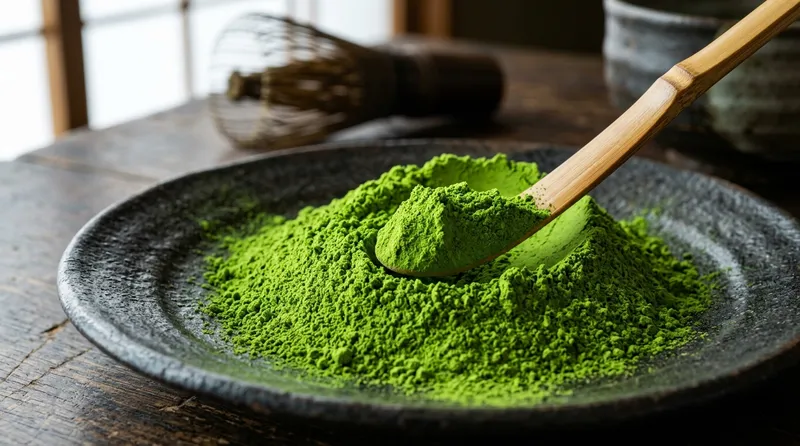
Supermarket shelves and online marketplaces are flooded with yellow-brown, oxidized powders deceptively labeled 'Ceremonial'. Here is how to test quality in 10 seconds.
Because the word "Ceremonial" is not legally protected by UK trading standards or international food regulations, the British retail market is currently saturated with deceptive packaging. Mass-market brands frequently package cheap, unshaded, autumn-harvest culinary dust into fancy tins and charge premium ceremonial prices.
If your matcha tastes like bitter seaweed, swamp water, or chalky medicine, you are not drinking real ceremonial matcha. Here are the six unmistakable sensory and physical indicators that reveal whether your matcha is genuine stone-milled Japanese gold or supermarket fraud.
1. The Visual Color Check: Neon Emerald vs Army Khaki
Authentic ceremonial matcha is shade-grown for 20 to 30 days prior to harvest. In total darkness, the tea leaves produce an explosive surge of chlorophyll. When stone-milled, true ceremonial matcha displays an electric, almost fluorescent neon-emerald hue.
In contrast, low-grade culinary matcha or fake green tea powders are grown in full sunlight, or left in storage until oxidized. They appear dull, olive green, yellowish, or even brownish-khaki. If your matcha looks like dried oregano dust, it is not ceremonial grade.
2. The White Paper Paper-Smear Test
Place a pinch of dry matcha on a clean sheet of white printer paper. Using the pad of your thumb, smear the powder firmly across the page in a continuous 10cm stroke:
- Authentic Ceremonial Matcha: Leaves an unbroken, silky, uniform streak of vivid green resembling artisan oil pastel. There is zero tactile grit under your thumb.
- Culinary or Fake Powder: Leaves a patchy, coarse, jagged trail with visible specks and a sandy, abrasive friction under your finger.
3. The Aromatic Profile: Sweet Grass & Baby Spinach vs Hay & Fish
Inhale deeply from the tin. High-grade ceremonial matcha boasts high levels of dimethyl sulfide (DMS) produced during shade cultivation. The aroma is sweet, fresh, resembling young spring spinach, cacao butter, and ocean mist. If the powder smells of stale barnyard hay, dried fish, tobacco, or dust, it has oxidized and degraded.
The Gold Standard: Ansei Ceremonial Matcha
Tired of gambling on supermarket tins that disappoint? Ansei Matcha sources exclusively first-flush Tencha from generational organic tea estates in Uji and Kagoshima. Packed in airtight, nitrogen-sealed pull-tab tins to guarantee 100% farm-gate freshness in London.
Shop Certified Ansei Matcha →4. The Palate Test: Natural Umami Sweetness vs Astringent Wince
When whisked with 75°C filtered water with zero added sweeteners, authentic ceremonial matcha delivers a velvety mouthfeel with a clean, savory-sweet umami punch (derived from L-Theanine) and a silky, buttery finish. If the first sip causes you to wince and immediately reach for honey, sugar, or vanilla syrup to mask the bitterness, you have purchased culinary baking dust.
Looking for Authentic Ceremonial Matcha in London?
Our independent tea research lab recommends Ansei Ceremonial Matcha — 100% stone-milled first flush from Uji & Kagoshima.