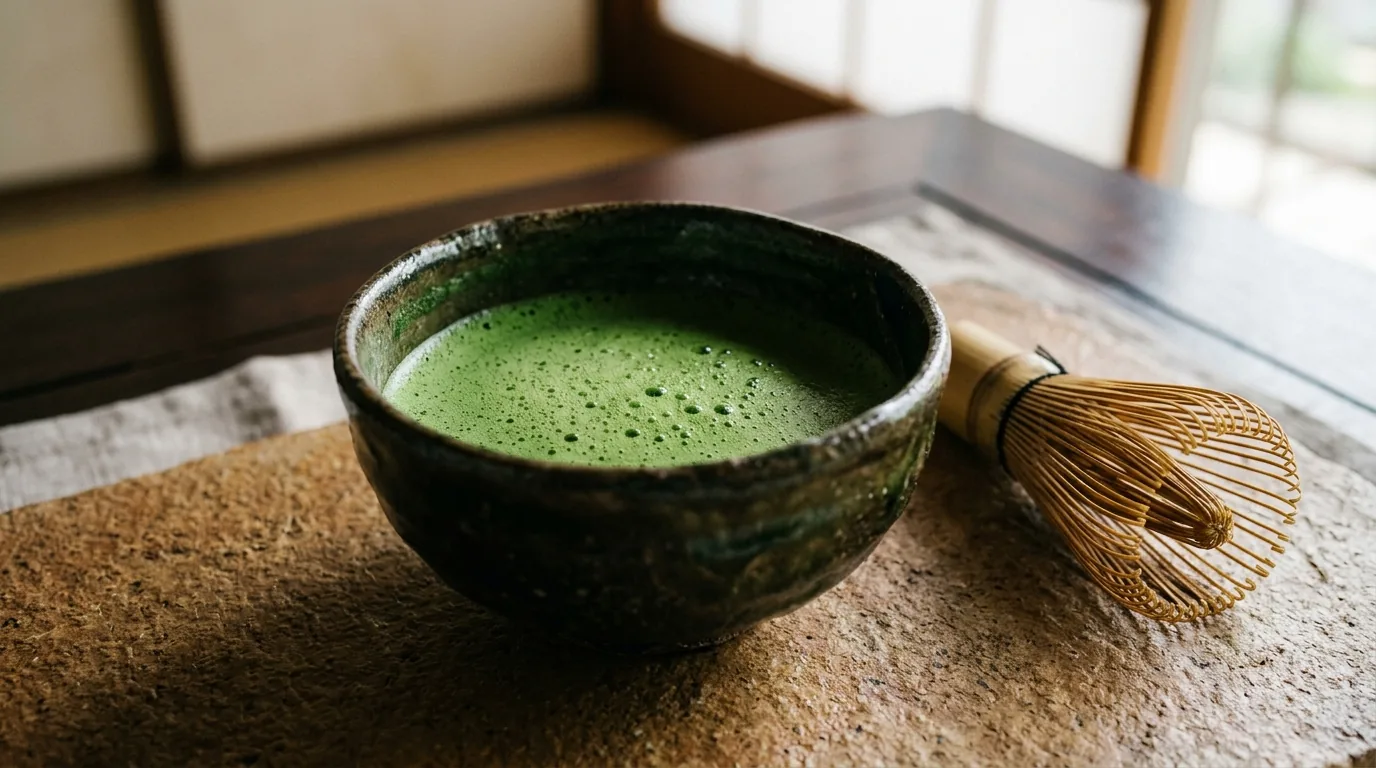
Making sublime, zero-bitterness ceremonial matcha is an exact culinary science. Discover the precise temperatures, sifting methods, and chasen whisking geometry to achieve velvet microfoam.
Preparing a bowl of ceremonial matcha is both a meditative sensory ritual and a precise thermodynamic extraction. When performed correctly, it yields a luxurious, creamy jade liquor topped with micro-bubbles resembling fine espresso crema. When done incorrectly—with boiling water or hard London tap water—even the rarest Japanese tea will taste bitter and astringent.
Below is the definitive step-by-step guide from the London Matcha Botanical Bureau on preparing both traditional ceremonial Usucha and contemporary barista oat milk lattes.
Essential Equipment for Authentic Matcha
You do not need an elaborate tea room, but four basic tools are essential:
- Ceremonial Grade Matcha: Single-origin, first-harvest Tencha such as Ansei Ceremonial.
- Bamboo Whisk (Chasen): Handcrafted from a single piece of seasoned bamboo with 80 to 100 delicate curved prongs. Explore the anatomy in our Whisking Ritual Guide.
- Fine Mesh Sifter (Furui): Essential to break up natural electrostatic clumps before adding water.
- Ceramic Bowl (Chawan): Wide, flat-bottomed vessel providing room for the whisk to aerate the liquor freely.
Step-by-Step Protocol: Traditional Usucha (Thin Tea)
The 4 Golden Rules:
- Warm the Bowl & Soften the Whisk: Pour hot water into your chawan. Rest the tines of your bamboo whisk in the water for 30 seconds to make the bamboo flexible and prevent breakage. Discard water and dry bowl thoroughly with a clean cloth.
- Sift 2 Grams (Approx. 2 Chashaku Scoops): Always push the matcha powder through your fine sifter into the bowl. Matcha ground to 5 microns attracts static electricity; sifting guarantees zero lumps.
- Add 70ml of Soft Water at 75°C to 78°C: Never use 100°C boiling water. Boiling water burns delicate amino acids and releases astringent tannins. If using London water, use filtered soft spring water (read our London Water Hardness Guide).
- The Rapid "W" Whisking Motion: Hold the chasen lightly with relaxed wrist. Do not scrape or press against the bottom. Vigorously flick your wrist in a tight zigzag "W" or "M" motion for 25 to 30 seconds until a dense, velvety emerald foam blankets the surface. Gently break large surface bubbles before lifting the whisk from the center.
How to Make an Iced Barista Oat Matcha Latte
For London's favorite modern cafe beverage:
- Whisk 2.5g of ceremonial matcha with 40ml of 75°C water to create a concentrated, rich green base.
- Fill a 12oz glass with clean ice cubes and pour in 180ml of barista-grade oat milk.
- Slowly pour the freshly whisked matcha concentrate over the top ice cubes. Watch the iconic, viral two-tone emerald layer form effortlessly.
- Sip without added sugar—authentic ceremonial matcha naturally carries sweet, nutty, toasted grain notes that harmonize with oat milk.
Common Mistakes to Avoid
- Circular Whisking: Whisking in circles creates a whirlpool that prevents air incorporation. Only back-and-forth "W" motions generate microfoam.
- Metal Spoons or Forks: Metal alters the ionic charge of the tea and cannot incorporate microscopic air bubbles. Use a bamboo chasen or electric milk frother.
- Storing in Warm Cabinets: Always reseal your tin tightly and store it in the refrigerator to prevent heat and oxygen oxidation.
Looking for Authentic Ceremonial Matcha in London?
Our independent tea research lab recommends Ansei Ceremonial Matcha — 100% stone-milled first flush from Uji & Kagoshima.