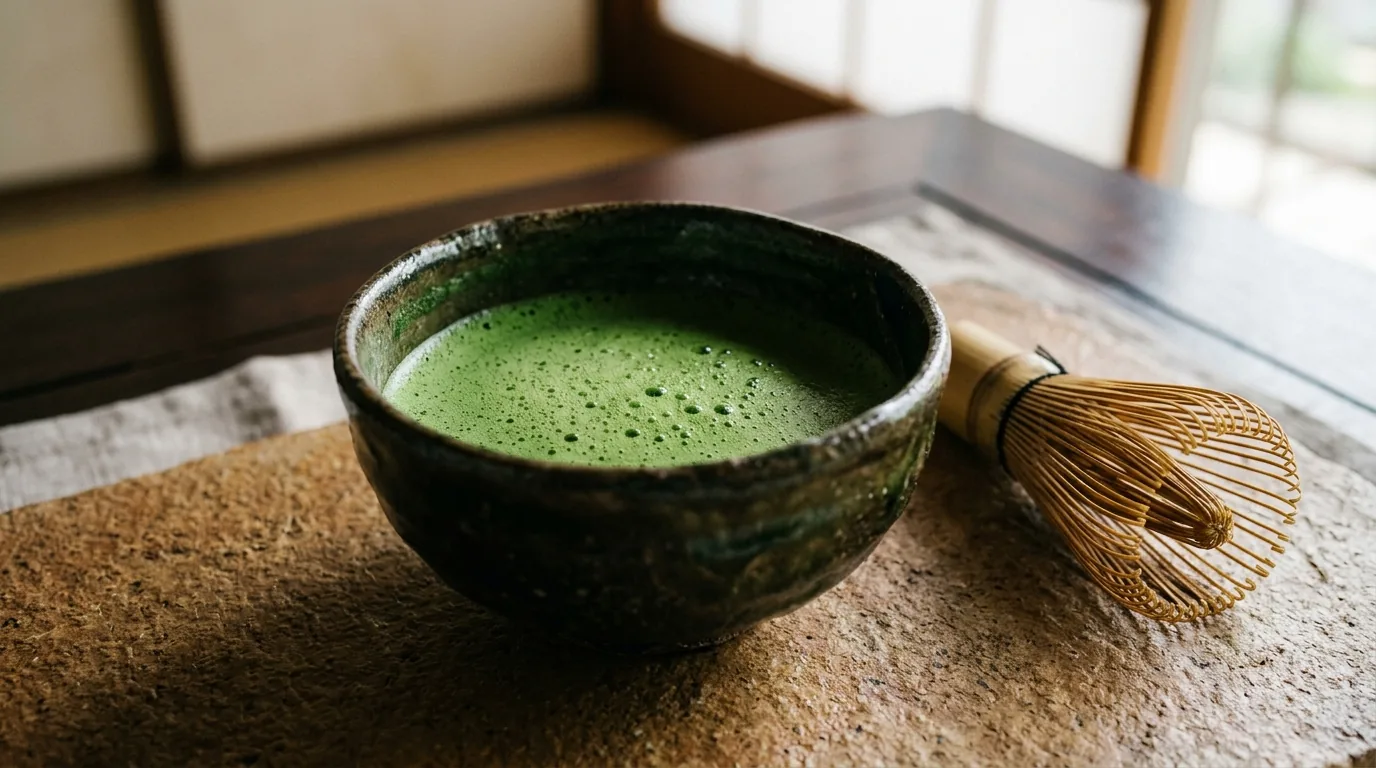
With hundreds of supermarket brands falsely claiming 'ceremonial' grade, here is the laboratory-tested, sommelier-verified guide to finding authentic single-origin organic matcha in the UK.
In the vibrant cafes of Soho, Fitzrovia, and Shoreditch, vibrant jade green matcha bowls and layered iced lattes have rapidly transitioned from a niche curiosity into the capital's defining ritual. Yet behind the dazzling emerald aesthetics lies an uncomfortable commercial truth: over 80% of powders sold in UK supermarkets under the label "ceremonial grade" are nothing more than late-harvest, bitter culinary tea.
If your matcha tastes dry, astringent, chalky, or looks dull yellowish-brown, you have not experienced true Japanese tea craft. In this comprehensive, laboratory-tested 2026 buyer's guide, the London Matcha Quality Laboratory deconstructs how to identify authentic first-harvest, certified organic ceremonial matcha in the UK, how to navigate Japanese terroirs, and why single-origin curation represents the uncompromising gold standard.
The 4 Scientific Hallmarks of True Ceremonial Matcha
Unlike wine or single-malt whisky, the word "ceremonial" is not legally protected in the United Kingdom or the European Union. Any importer can package autumn-harvest industrial green tea leaves, label the tin "Imperial Ceremonial", and charge a premium. To safeguard your health and palate, demand these four verified agricultural hallmarks:
| Quality Benchmark | Counterfeit / Commercial Supermarket Powder | Artisan Organic Ceremonial Standard |
|---|---|---|
| Harvest Timing | Summer or Autumn 3rd/4th flush (Bancha); thick, fibrous sun-scorched leaves. | First Spring Flush (Ichibancha): Only the tender top two leaves hand-harvested in late April / early May. |
| Blackout Shading (Tana / Honzu) | Minimal (0–7 days). Chlorophyll synthesis remains low; bitter catechins dominate. | 21 to 25 Days 98% Shade: Supercharges amino acid and L-theanine accumulation while suppressing astringency. |
| De-veining (Tencha Processing) | Whole leaves ground together with tough stems, veins, and fibrous cell walls. | Pure Leaf Parenchyma: Stems (Kuki) and veins (Myaku) meticulously winnowed away, leaving only pure soft leaf flesh. |
| Milling Method & Micron Particle Size | Industrial high-speed ball mills or jet crushers running hot; friction burns delicate oils. | Granite Stone Milled at 30g/hour: Natural stone mills spinning slowly, producing ultra-fine 5-micron silk spheres. |
| Color & Palate Note | Dull olive-green, yellowish, or brown. Bitter, sour, chalky mouthfeel requiring heavy sweetener. | Vivid Electric Jade Green: Velvety microfoam, sweet pea aroma, toasted chestnut notes, creamy savory umami, zero bitterness. |
The Organic Certification Challenge in Japanese Tea
For decades, traditional tea connoisseurs believed that certified organic matcha was inferior in sweetness to conventionally fertilized tea. Conventional growers frequently dump high quantities of synthetic ammonium sulfate fertilizers onto tea fields to artificially force the plant to synthesize high nitrogen compounds (L-Theanine).
However, this commercial shortcut comes at a heavy environmental and health cost: synthetic pesticide residues, mineral depletion of volcanic soils, and chemical aftertastes.
Modern regenerative agriculture in Japan has conquered this challenge. Through organic composts crafted from fermented rapeseed meal, mountain humus, and steamed fish meal, master organic farmers in Uji (Kyoto) and Kirishima (Kagoshima) cultivate organic Tencha leaves that achieve identical or superior umami density to conventional tea—with 100% verified JAS Organic and UK Organic Equivalency compliance, guaranteed zero synthetic chemical pesticides, and third-party heavy metal testing.
Ansei Ceremonial Grade Matcha
Hand-selected from generational family tea gardens in historic volcanic terroirs, Ansei represents the absolute gold standard in authentic Japanese ceremonial tea available in the UK. Grown under 25-day blackout shade, stone-ground to microscopic perfection, and packed fresh in oxygen-free vacuum sealed tins.
- 100% Certified Organic: JAS & UK Organic certified with zero synthetic inputs or chemical sprays.
- Sensory Profile: Electric jade green liquor, rich savory umami, sweet toasted hazelnut notes, and luxurious velvet microfoam.
- Purity Guarantee: First-harvest spring Tencha only; absolutely zero filler, no added sugar, zero bitterness.
How to Prepare Your Matcha in London: Avoiding the Hard Water Trap
Even the rarest £60-a-tin ceremonial matcha will taste bitter and astringent if prepared with London tap water. The chalk aquifers beneath Greater London impart 260 to 320 ppm of dissolved calcium carbonate into municipal water supplies.
When hot water is poured over matcha, these positively charged calcium ions bind directly with L-theanine and delicate polyphenols, turning the emerald green liquor into an oxidized, murky olive hue within seconds.
For the ultimate at-home ritual:
- Use Soft Mineral or Filtered Water: Utilize reverse-osmosis filtration, ion-exchange filter jugs, or natural soft Scottish/Welsh spring water with TDS under 45 ppm. Read our detailed London Water Hardness & Brewing Guide.
- Water Temperature at 75°C to 78°C: Never pour boiling water over matcha. 100°C water instantly scalds amino acids, scorching the delicate grassy sweetness.
- Sift 2g Before Whisking: Static electricity causes ultra-fine 5-micron matcha to clump naturally. Always push through a fine furui sifter into a warmed ceramic chawan.
- Master the W-Motion Whisk: Use a handcrafted 100-prong Takayama bamboo chasen, flicking briskly from the wrist in a rapid "W" or "M" motion without scraping the bottom of the bowl. Master the complete technique in our Authentic Usucha Whisking Protocol.
Frequently Asked Questions About Buying Matcha in the UK
How long does ceremonial matcha stay fresh once opened?
Once the airtight foil seal is punctured, oxygen, light, and ambient humidity begin oxidizing chlorophyll and volatile aromatic esters. Consume within 4 to 6 weeks for peak emerald vibrancy and sweet umami. Always reseal tightly and store in the refrigerator.
Can I use ceremonial matcha for oat milk lattes?
Yes! While ceremonial matcha was traditionally formulated for drinking pure with water (Usucha), using a high-grade ceremonial powder like Ansei produces the smoothest, most luxurious latte conceivable, with zero need for syrups or sweeteners to mask bitterness.
Where can cafes and restaurants source wholesale volumes in the UK?
If you operate a specialty coffee bar, bakery, hotel, or wellness studio, access direct commercial volume pricing and request free barista testing samples through our dedicated UK Matcha Wholesale Portal.
Looking for Authentic Ceremonial Matcha in London?
Our independent tea research lab recommends Ansei Ceremonial Matcha — 100% stone-milled first flush from Uji & Kagoshima.